How Magnetic Tiles Support Early Childhood Development in Ages 3–8
Magnetic TilesShare
The early childhood stage is an important milestone in a child’s life, where a lot of learning takes place in terms of cognitive, physical, creative, linguistic, and social-emotional growth. In the age group between three and eight, children learn quickly, and engaging toys in their formative years can positively affect their upbringing.
One of the best and most popular educational toys today is magnetic tiles. With colorful shapes that connect easily to create amazing designs and structures, these tiles provide endless entertainment and opportunities for exploration, imagination, and thinking. They have been recognized by parents and professionals in the field of education as an excellent aid to child development.
Here, we will discuss how Magnetic Tiles can assist in developing life skills in kids aged 3 to 8 years and more.
What Are Magnetic Tiles?
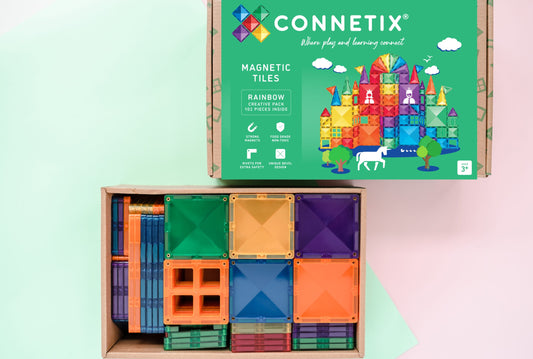
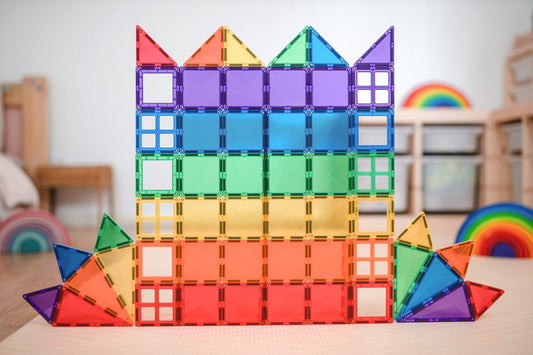
The magnetic tiles are a collection of geometric blocks made using hard plastic material with magnets on their sides. Kids will be able to use the tiles for making different flat objects and three-dimensional structures, including animals, cars, castles, and towers, among other imaginative creations.
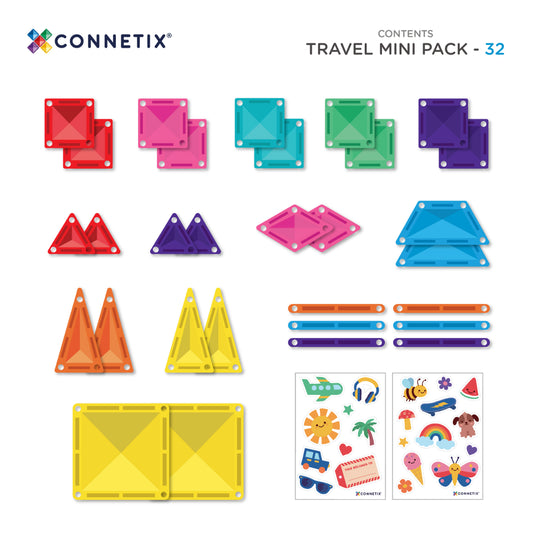
They come in different forms, such as squares, triangles, rectangles, and hexagons, enabling kids to have fun learning in an unrestricted manner.
Most toys are designed for one particular use, while magnetic tiles offer flexibility in their usage depending on the level of development of the child using the toy.
Why Ages 3–8 Are Critical for Early Childhood Development
The ages from 3-8 encompass the period of exceptional development of the brain. This is when children:
- Acquire basic cognitive skills
- Gain better eye-hand coordination
- Acquire language and communication skills
- Learn how to socialize
- Learn basic mathematical and scientific theories
- Improve creativity and imagination
Giving children educational activities during this period is beneficial for laying a solid foundation for their future success in studies.
How Magnetic Tiles Encourage Cognitive Development
Cognitive development is the process by which young children think, learn, remember, and solve problems. Magnetic tiles are an ideal way to develop cognitive skills because they help children plan, try out, and review their plans.
When constructing something using magnetic tiles, the child develops the following cognitive skills:
- Seeing patterns and connections
- Knowing what causes what to happen
- Building better memories and focus
- Reasoning logically
- Thinking critically
Through trial and error in their construction activities, children gain important knowledge about stability and structure.
Supporting Fine Motor Skills Through Magnetic Tile Play
Fine motor skills relate to the fine muscles in hands and fingers that are involved in tasks such as writing, drawing, buttoning clothing, and many more.
Playing with magnetic tiles assists in enhancing these fine motor skills through:
- Grasping and handling of single pieces
- Adequate alignment of magnets
- Attachment and detachment of tiles
- Construction of complex models
These actions enhance the dexterity and hand-eye coordination of children. This form of play proves to be very helpful for young children as preparation for future writing and learning experiences.
Building Creativity and Imagination with Magnetic Tiles
Among the many advantages of using magnetic tiles, perhaps one of the most notable is their ability to spark creativity.
This is because magnetic tiles are open-ended toys, meaning that there are no restrictions for how they can be used or what children can create with them. For instance, a child could use magnetic tiles to make the following:
- A castle
- A spacecraft
- A zoo
- A race car
- A skyscraper city
- An imaginary land
Such activities encourage children to become more imaginative, innovative, and creative thinkers.
How Magnetic Tiles Enhance Problem-Solving Skills
Problem-solving skills are critical in life, and they start at a young age.
Magnetic tile games offer young kids problems such as the following:
- How to make the tower higher
- How to stop it from falling down
- How to form a particular shape
- How to connect the tiles effectively
If their design does not meet expectations, they have to adapt and try again until they succeed.
Developing Spatial Awareness and Early Math Concepts
Spatial awareness is an important ability that enables children to recognize relationships between objects. It plays a vital role in mathematics, engineering, architecture, and solving problems in real-life scenarios.
The magnetic tiles allow for developing spatial awareness skills through:
- Shapes and geometry
- Symmetry
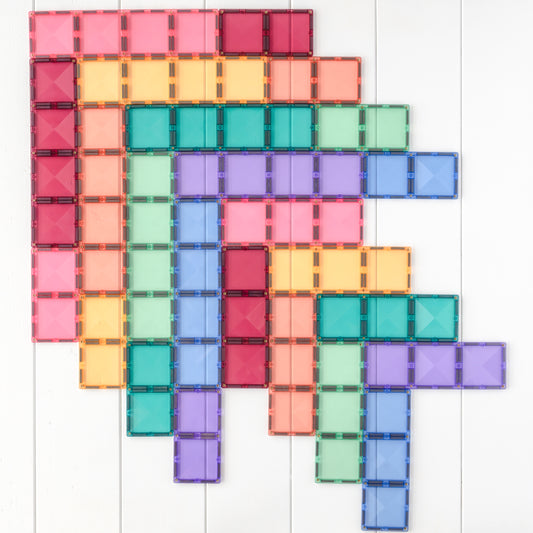
- Patterns
- Comparing sizes
- Position
Playing naturally leads to discovering basic mathematical skills such as numbers, measurement, comparison of sizes and shapes, and even sorting things out.
Strengthening Language and Communication Skills During Play
Magnetic tile play can be a social activity where children engage in conversations, telling stories, and working together, thereby developing language skills.
The following activities help children develop communication skills:
- Describing what they have built
- Explaining their construction plans
- Asking questions
- Sharing ideas
- Telling stories through imagination
For instance, a child constructing a city would narrate about the various structures and the stories of the inhabitants in that city and the functions of those structures.
Encouraging Social and Emotional Development
Children who engage in play with magnetic tiles gain critical skills related to socialization and emotions.
In collaborative construction activities, children learn to:
- Take turns
- Share materials
- Work together towards goals.
- Solve disputes
- Listen to others’ suggestions
Accomplishing tasks contributes to children’s self-respect and self-confidence. Children feel proud and accomplished by bringing their imagination to life through constructions.
Furthermore, creative play enables children to express emotions and builds patience and perseverance.
Magnetic Tiles and STEM Learning for Young Children
STEM learning, or Science, Technology, Engineering, and Mathematics, is becoming increasingly important in contemporary education. Magnetic tiles introduce the children to STEM through play.
Engineering skills are developed because children learn to:
- Build constructions
- Test their sturdiness.
- Learn about balance.
- Play around with geometric shapes
Science concepts emerge through observation and experimentation, while mathematical understanding develops through counting, measuring, sorting, and geometry.
Through learning through play, the child stays interested while developing vital skills for future learning.
Age-Appropriate Magnetic Tile Activities for Children Aged 3–8
Ages 3–4
- Activities involving shape matching
- Games to sort colors
- Towers and walls construction
- Pattern-making activity
Ages 5–6
- House and bridge construction
- Construction of animals and cars
- Learning symmetry
- Mathematical activities of counting and sorting
Ages 7–8
- Construction of more complex 3D models
- Challenges in engineering (STEM)
- Architectural designs
- Problems and solutions
- Themed constructions
These activities can be adapted to match a child's developmental level and interests.
Benefits of Magnetic Tiles at Home and in Educational Settings
Magnetic tiles are beneficial both at home and in educational settings.
At Home
- Foster independent play
- Cut down on screen time
- Help families bond
- Boost creativity and learning
In Educational Settings
- Encourage collaborative learning
- Facilitate STEM education
- Enhance hands-on teaching
- Cater to diverse learning styles
Educators frequently incorporate magnetic tiles into lessons covering math, science, literacy, and socialization skills.
Tips for Parents and Educators to Maximize Learning Through Magnetic Tiles
For parents and caregivers to make learning maximized through magnetic tiles:
- Encourage an explorative play approach instead of giving directions on how to build.
- Ask thought-provoking questions during playtime.
- Include age-appropriate and ability-appropriate challenges during play.
- Weave stories during construction activities.
- Engage children in team-building tasks together with friends or siblings.
- Relate construction activities to actual structures or objects in reality.
- Acknowledge the efforts put in by celebrating not just the end product.
By creating opportunities for exploration and discovery, adults can help children gain even greater developmental benefits.
Conclusion
However, magnetic tiles have gone beyond just being playthings. These toys can be considered effective educational tools, which help in developing various skills, including cognitive development, creativity, motor skills, language skills, socio-emotional development, and early STEM education.
Children ranging from age 3 to age 8 benefit from playing with magnetic tiles as they offer both pleasure and education. In other words, using these toys can enhance different aspects of children’s development by providing both fun and learning.
Buying high-quality magnetic tiles is always worth it, as they contribute to a child’s development and overall growth.
FAQs
1. Are magnetic tiles suitable for 3-year-olds?
Yes. Most Magnetic Tile Sets are designed for children aged 3 and older. They help develop fine motor skills, shape recognition, and early problem-solving abilities.
2. How do magnetic tiles support STEM learning?
Magnetic tiles introduce children to engineering, geometry, spatial reasoning, and scientific experimentation through hands-on building activities.
3. Can magnetic tiles improve problem-solving skills?
Absolutely. Children learn to test ideas, overcome challenges, and adjust designs, which strengthens critical thinking and problem-solving abilities.
4. What age are magnetic tiles suitable for?
Most magnetic tiles are suitable for children aged 3 and above, depending on the manufacturer's age recommendation. Younger children should always be supervised during play. Magnetic tiles can continue to be useful as children grow, helping develop creativity, spatial awareness, problem-solving and early STEM skills.
5. What skills do children develop through magnetic tile play?
Children develop cognitive skills, creativity, fine motor skills, communication abilities, spatial awareness, social-emotional skills, and foundational STEM knowledge.
6. How many magnetic tiles does a child need to start?
A starter set of 50–100 pieces is typically enough for beginners, while larger sets allow for more complex structures and collaborative play.
7. Are magnetic tiles good for kids?
Yes, magnetic tiles are good for kids because they support creativity, fine motor skills, spatial awareness, problem-solving and early STEM learning. Their open-ended design encourages children to experiment, build different structures and learn through hands-on play.