How Magnetic Tiles Help Kiwi Kids Develop STEM Skills Through Play
Magnetic TilesShare
In recent times, STEM education has emerged as a key component in preparing the next generation for the future. Through stimulating curiosity, solving problems, and being creative and critical, STEM learning helps kids grow valuable skills inside the classroom and outside of it as well. In New Zealand, engaging methods of teaching STEM will ensure more efficient and pleasant studying.
An easy-to-use and effective STEM learning toy you can get right now is magnetic tiles. These colored building blocks enable kids to experience various aspects of science, technology, engineering, and math through active games and activities. From creating houses and bridges to other exciting projects, New Zealand children can develop vital skills in STEM in a playful way.
Here you will learn about STEM benefits with the use of magnetic tiles, skills developed in children, and activity ideas.
What Are Magnetic Tiles?
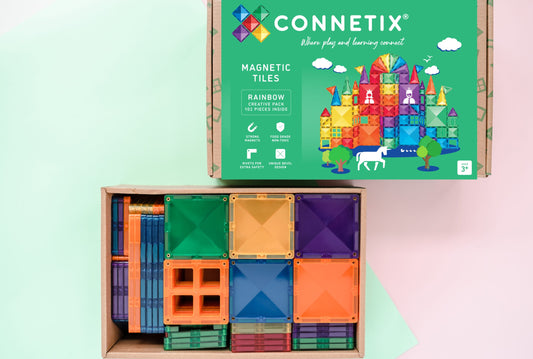
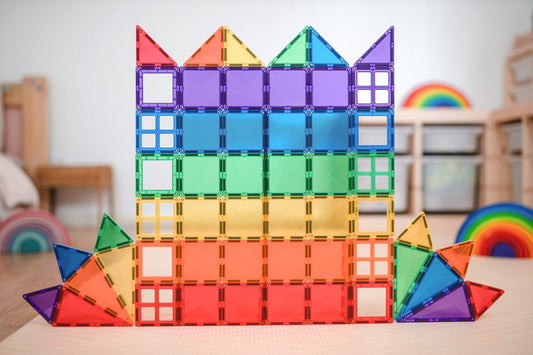
The magnetic tiles are construction toys that feature colorful pieces with geometric shapes that have magnets embedded in them. These magnets make the tiles easy to connect and let kids build two and three-dimensional designs with them.
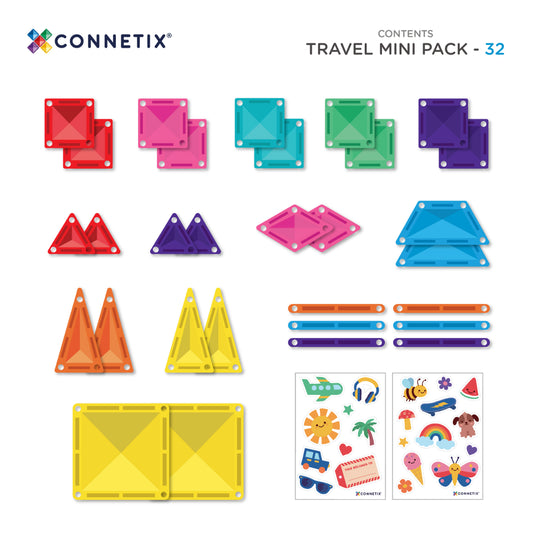
These common magnetic tile designs come in different shapes like:
- Squares
- Triangles
- Rectangles
- Hexagons
- Special designs like wheels and arches
As opposed to the regular Building Blocks, the magnetic blocks offer more options for assembly from many angles.
What Does STEM Mean for Children?
The abbreviation "STEM" is an acronym that stands for
- Science - which means to understand the world through observation and experimentation.
- Technology - which is the use of tools and systems to overcome issues.
- Engineering - which is the design and construction or improvement of a structure or solution.
- Mathematics - which includes numerical values, patterns, shapes, measurements, etc.
In the case of toddlers, there is no need for them to have any complicated classes on STEM subjects.
Children playing with magnetic tiles come across concepts relating to STEM unknowingly.
The children apply themselves in solving problems and discovering results.
How Magnetic Tiles Support STEM Learning
The magnetic tiles offer an effective means through which kids can engage in STEM activities through hands-on play.
Encouraging Scientific Thinking
While playing, kids gain through learning by doing. The questions that may arise during the course of building might include:
- Why does the tower collapse?
- How do I make it more stable?
- What would happen if I used bigger pieces?
Such observations are useful for developing scientific reasoning among kids.
Introducing Engineering Concepts
Engineering starts with design and construction. Magnetic tiles enable kids to construct bridges, homes, towers, and other structures while learning about:
- Stability
- Balance
- Weight Distribution
- Support
Kids can figure out which designs are stable and which need work.
Developing Mathematical Understanding
The magnetic tiles offer many great ways to learn about math concepts, such as:
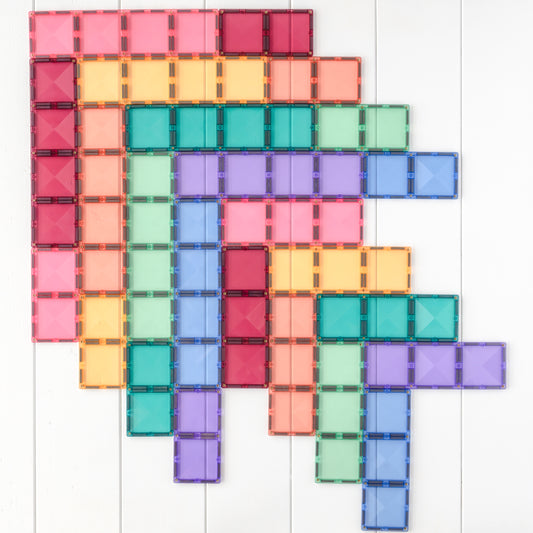
- Shapes and Geometry
- Symmetry
- Patterns
- Counting
- Measurement
- Spatial Awareness
These concepts are learned by the kids while making designs with tiles.
Supporting Problem-Solving Skills
Construction tasks always involve making decisions. Children will have to analyze the following:
- What components to use
- How shapes combine
- How to overcome difficulties during construction
These tasks help develop logical skills and build perseverance.
STEM Skills Kiwi Kids Can Develop Through Magnetic Tile Play
There are numerous STEM skills that magnetic tiles can help children acquire at different points in their education process.
1. Critical Thinking Skills
Children are encouraged to assess situations and make decisions while planning and adapting their creations.
2. Creative Skills
Open-ended activities allow kids to create their own structures and designs. Since there is no right or wrong method of building, kids can be creative with their ideas.
3. Visual-Spatial Awareness
Visual-spatial skills can be acquired by knowing how shapes fit into each other.
4. Problem-solving
In case of collapse or malfunction of the structure, children get familiar with problem solving and experimenting with new ways out.
5. Engineering
Construction of stable structures develops engineering skills in a playful manner.
6. Mathematical Reasoning
Among others, children will develop the following mathematical concepts:
- Shape
- Geometry
- Symmetry
- Counting
- Sorting
- Pattern making
7. Collaboration and Communication
During construction activities, children develop teamwork skills such as
- Sharing ideas
- Planning activities
- Working in a team
- Communicating their thoughts
Magnetic Tile Activities for New Zealand Children
There are limitless possibilities in using magnetic tiles for promoting STEM education. Below are a few games for Kiwi kids to try out either at home, in early childhood education institutions, or even in classrooms.
Building Famous New Zealand Structures
Let them build:
- Sky Tower
- Auckland Harbour Bridge
- Beehive Building
- Local structures familiar to them
It brings STEM education closer to the students through their knowledge about their surroundings.
Create Earthquake-Resistant Structures
Because New Zealand is an earthquake-prone country, the children can create buildings and see how stable they are when the table is gently shaken.
This exercise helps introduce:
- Engineering
- Building design
- Science experimentation
Design a Farm
The majority of Kiwi children have been exposed to farms. With the help of Magnetic Tiles, construct:
- Barns
- Shelters for farm animals
- Barriers
- Farmhouse
Build Bridges
Get children to build a bridge that will cover a set distance with just magnetic tiles.
This helps develop:
- Problem-solving skills
- Measurement
- Engineering skills
Patterns and Symmetry Challenge
Get children to construct:
- Repeated patterns
- Symmetric shapes
- Shape patterns
- Such tasks promote math skills.
Marble Run Creations
In case there are compatible parts, kids can create tracks to see how the marbles roll down in various ways.
These include:
- Gravity
- Movement
- Cause and Effect
Benefits of Magnetic Tiles Beyond STEM
In addition to being wonderful STEM educational toys, magnetic tiles can help children develop other skills too.
Fine Motor Skills
Putting together and taking apart pieces is an activity that helps build muscles and coordination in hands.
Language Skills
Kids love to narrate their work and discuss it with others, which promotes language development.
Independent Learning
Playing with magnetic tiles encourages independent learning and exploration.
Building Confidence
When they successfully complete something, kids get a feeling of accomplishment and learn to persevere.
Entertainment Without Screens
Magnetic tiles offer entertaining activities to children without having to look at any screens.
Why Magnetic Tiles Are Perfect for New Zealand Homes and Classrooms
The use of magnetic tiles correlates with the approach in New Zealand, which focuses on hands-on and child-led education.
Facilitate Inquiry-Based Learning
Inquiry-based learning is encouraged by many teaching techniques used in New Zealand. This type of learning corresponds with the application of magnetic tiles.
Suitable for Children of All Ages
Kids from various age groups can play together using magnetic tiles that fit them developmentally.
Flexible to Be Used in Diverse Educational Settings
Magnetic tiles can be used effectively in the following settings:
- At home
- ECE Centers
- Primary classrooms
-
After School Programs
Allow Open Exploration and Creativity
Open-ended materials promote exploration and help kids direct their learning process.
Durable and Sustainable
With proper care, magnetic tiles will last for years.
Tips for Parents to Encourage STEM Learning with Magnetic Tiles
There are several things that parents can do in order to optimize children’s experience of learning STEM concepts through play.
Ask Open-Ended Questions
Some open-ended questions to ask include:
- How can we make it taller?
- What could we do to make it sturdier?
- Why did it fall down?
Introduce Building Challenges
Challenge kids with exciting tasks like these:
- Make the tallest building.
- Construct a bridge.
- Plan a house with different rooms.
Encourage Experimentation
Let kids make mistakes and learn from them without worrying about achieving perfection.
Build Together
Working in groups provides opportunities for learning and bonding among family members.
Connect Play to Real Life
Use real-life instances from daily New Zealand life like bridges, buildings, and playgrounds as examples of engineering and designing.
Conclusion
Magnetic tiles are not only toys but also an interactive method that allows New Zealand children to hone their skills in science, technology, engineering, and mathematics through play. From learning different shapes to engineering concepts, problem-solving skills, and even creative abilities, children can benefit from using magnetic tiles in many ways.
Regardless of whether these tiles are used at home, early learning centers, or even schools, there is no end to the learning possibilities with magnetic tiles. Through open-ended play, parents and teachers alike will be able to help children establish solid foundations when it comes to science, technology, engineering, and math.
FAQs
1. From which age can children begin to use magnetic tiles?
It is recommended that most Magnetic Tile Toys are appropriate for kids above the age of three years old.
2. How do magnetic tiles assist STEM education?
The magnetic tiles assist STEM learning by allowing children to explore science, engineering, math, and other essential elements in learning through play.
3. Is it possible to use magnetic tiles in a class setting?
Of course, it is possible since many early child care centers and primary school classrooms employ magnetic tiles in learning.
4. Can magnetic tiles improve mathematical abilities?
Yes, the toys teach children to learn geometrical shapes, patterns, counting, symmetry, measurements, and others.
5. Why are magnetic tiles popular in New Zealand?
The toys are appropriate for the country due to their compatibility with play-based and inquiry-based learning techniques.