Connetix Tiles Pastel vs Rainbow: Which Pack Should You Choose?
Magnetic TilesShare
Making a selection between Connetix Tiles Pastel and Rainbow is challenging since both products give plenty of opportunities for engaging creative play. Children can use both products to create colorful castles, houses, towers, bridges, and other fantastic buildings. However, the only difference is the color scheme of tiles that depends on the taste of your child and his/her preferences.
For those parents from New Zealand who are interested in educational toys for their kids and want to buy something interesting and helpful at the same time, information about the features of these sets will assist them in their decision-making process. Below, there is an informative comparison of Connetix Tiles Pastel vs Rainbow.
What Are Connetix Tiles?
Connetix tiles are magnetic building blocks which aim at fostering open-ended play and exploration. The child will use the tiles for building two dimensional patterns and three dimensional structures through exploring colours, shapes, and balance among other things.
Whereas toys follow a specific way of playing, magnetic tiles give the child a chance to come up with something unique every time they play. This means that the child will begin with simple forms and advance to more complicated ones as he or she gains confidence.
Connetix provides parents with an option of choosing the tile range to go for, whether pastel or rainbow, depending on their preferences.
Connetix Tiles Pastel vs Rainbow: What's the Difference?
Another important distinction between the Connetix Pastel and Rainbow tiles is their visual appeal. The pastel range has softer tones compared to the vibrant rainbow colors.
Connetix Pastel Tiles
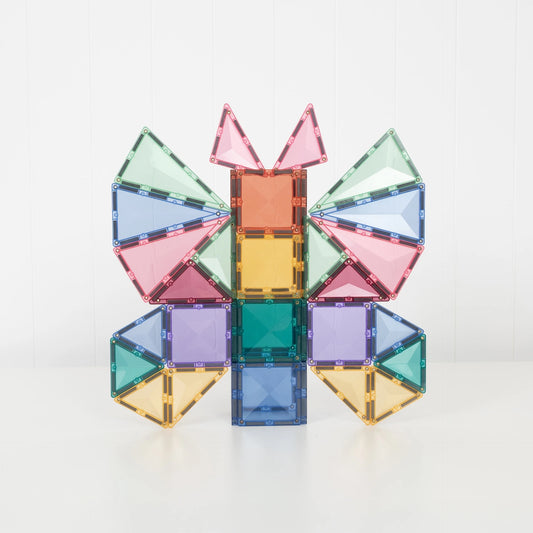
Connetix Pastel Tiles come with a range of soft colors that give them a soothing and harmonious appearance. It is a perfect choice for those people who like subtle colors or those who want to build harmonious structures.
These tiles are ideal for constructing modern houses, castles, colorful gardens, and various shops and decorations. Kids can explore their creativity using various soft colors.
Choose Pastel if your child enjoys:
- Soft colours and gentle colour combinations.
- Creating coordinated houses, castles and buildings.
- Designing patterns with different pastel shades.
- Building structures that use colour creatively.
Connetix Rainbow Tiles
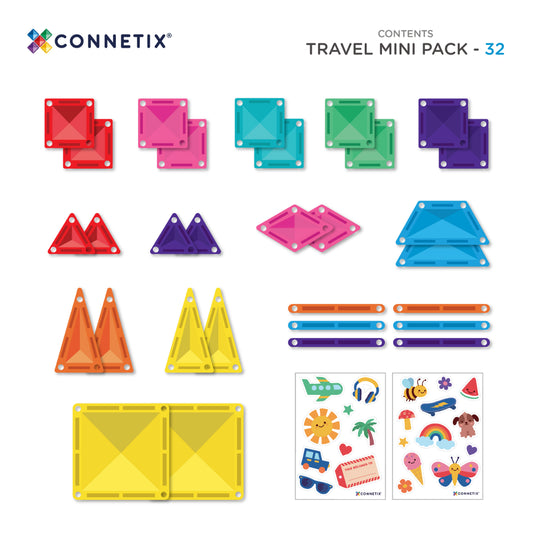
Connetix Rainbow Tiles feature bold, bright colours that make buildings and patterns stand out. Their vibrant appearance can appeal to children who enjoy colourful designs and experimenting with different colour combinations.
Rainbow tiles are ideal for building bright towers, rainbow bridges, colourful animals, garages and imaginative play environments. They can also help children explore colour matching, sorting and simple repeating patterns.
Choose Rainbow if your child enjoys:
- Bright and vibrant colours.
- Creating rainbow patterns and colourful structures.
- Sorting and matching different colours.
- Building playful designs with contrasting shades.
Key Differences Between Pastel and Rainbow Tiles
Although both collections support creative building, their visual styles may influence how children use them during play.
| Feature | Pastel Tiles | Rainbow Tiles |
|---|---|---|
| Colour palette | Soft, gentle shades | Bright, vibrant shades |
| Visual appearance | Subtle and coordinated | Bold and colourful |
| Building style | Coordinated designs and patterns | Colourful, contrasting creations |
| Learning opportunities | Shapes, patterns and colour recognition | Shapes, patterns and colour recognition |
| Creative play | Houses, castles and imaginative scenes | Towers, bridges and colourful structures |
| Compatibility | Can be combined with compatible Connetix ranges | Can be combined with compatible Connetix ranges |
The important point is that neither range is automatically better. Both offer creative and educational play opportunities, and the colour difference does not mean one is more suitable for learning than the other.
Educational Benefits of Connetix Magnetic Tiles
Whether you choose Pastel or Rainbow, magnetic tiles can support several areas of children's development through hands-on play.
1. Creativity and Imagination
Children can turn their ideas into physical structures, from simple houses to elaborate castles. Open-ended building encourages them to experiment, invent stories and find new ways to use the same pieces.
2. STEM Learning Through Play
Building with magnetic tiles introduces children to basic science, technology, engineering and mathematics concepts. They can explore balance, symmetry, geometry, shapes and simple engineering principles while constructing different designs.
3. Problem-Solving Skills
Not every structure will stand up on the first attempt. Children can learn to adjust their designs, change the position of a tile and try different approaches when a build becomes unstable.
4. Fine Motor Skills
Picking up, positioning and connecting tiles encourages hand-eye coordination and controlled hand movements. These skills develop naturally as children engage in building activities.
5. Social Skills and Teamwork
Magnetic tiles can be enjoyed independently or with siblings, friends and parents. Building together encourages children to share ideas, communicate, take turns and work towards a common goal.
Which Connetix Pack Is Better for Your Child?
The right choice depends on your child's interests, your budget and how you expect the tiles to be used.
For children who love bright colours: Rainbow tiles are an excellent option for colourful towers, bridges and imaginative creations.
For children who prefer softer shades: Pastel tiles offer a coordinated colour palette for building houses, castles and other creative designs.
For families buying their first set: Consider a Creative Pack if you want a versatile selection of shapes for different types of builds. Check the current piece count and included shapes before purchasing, as pack contents can vary between versions.
For families planning to expand their collection: You do not necessarily need to choose just one colour range. Compatible Connetix Pastel and Rainbow tiles can be combined, allowing children to explore more colour combinations and build larger structures over time.
Before choosing, consider what your child enjoys most. A child who loves vibrant colours may naturally prefer Rainbow, while another who enjoys gentle colour combinations may be drawn to Pastel.
Can You Mix Connetix Pastel and Rainbow Tiles?
Yes, compatible Connetix Pastel and Rainbow tiles can be used together in the same construction. This means you can start with one collection and add another later without limiting your child's creative options.
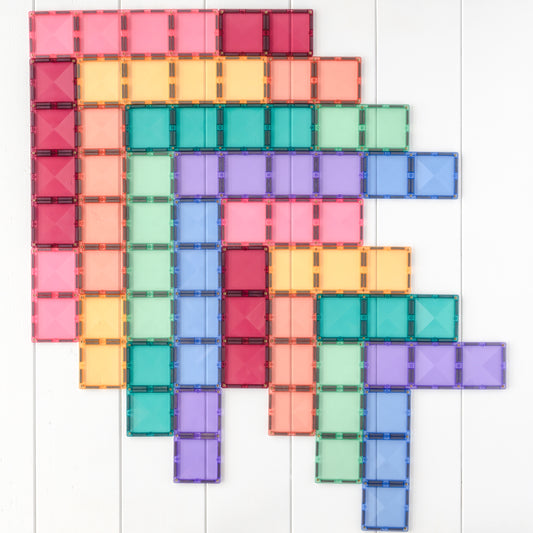
Mixing the two ranges can make building even more interesting. For example, children could use Pastel tiles to create the walls of a house and Rainbow tiles for its roof, windows or decorative features. They could also design colour patterns, multi-coloured towers and imaginative play scenes.
Combining collections can be a practical option for families who want to expand their magnetic tile collection gradually rather than purchasing a larger set immediately.
Tips for Choosing the Right Connetix Tiles in New Zealand
Before purchasing a set, keep these simple tips in mind:
- Consider your child's preferences: Choose the colour palette they are most likely to enjoy using.
- Check the piece count: Larger packs may offer more opportunities for ambitious builds, while smaller sets can be a practical introduction.
- Look at the shapes included: Squares and triangles provide a useful foundation for many building projects.
- Think about future expansion: Consider whether you may want to add more tiles or specialist packs later.
- Follow age recommendations: Connetix Tiles are generally recommended for children aged three and over. Always follow the manufacturer's safety guidance and supervise play where appropriate.
You can explore the Connetix Tiles collection at Magnetic Tiles NZ to compare available sets and find an option that suits your family.
Conclusion
When comparing Connetix Tiles Pastel vs Rainbow, the best choice comes down to personal preference rather than educational value. Both collections encourage imagination, problem-solving, creative construction and learning through play.
Choose Pastel if your family prefers soft, coordinated colours. Choose Rainbow if your child enjoys bright, vibrant designs. If you cannot decide, starting with one collection and adding the other later is a flexible way to expand your child's building possibilities.
Whichever option you choose, Connetix magnetic tiles offer opportunities for children to experiment, build and discover something new every time they play.
FAQs
1. What is the main difference between Connetix Pastel and Rainbow Tiles?
The main difference is the colour palette. Pastel tiles have softer shades, while Rainbow tiles feature brighter, more vibrant colours. Both support creative building and learning through play.
2. Are Connetix Pastel Tiles better than Rainbow Tiles?
Neither is inherently better. Pastel and Rainbow tiles offer similar types of building opportunities. The right option depends on your child's colour preferences and the designs they enjoy creating.
3. Can Connetix Pastel and Rainbow Tiles be used together?
Yes, compatible Pastel and Rainbow tiles can be combined. Mixing the collections gives children more colour combinations and additional creative possibilities.
4. Which Connetix Tiles set should I buy first?
A Creative Pack can be a versatile starting point because it includes a selection of shapes for different constructions. Compare the current pack contents, piece count and price before deciding.
5. Are Connetix Tiles suitable for toddlers?
Connetix Tiles are generally recommended for children aged three and over because they contain magnets. Follow the manufacturer's age guidance and safety instructions, and keep tiles away from children who are too young to use them safely.